Equipment route / 01 / the person
Personal Kit Explained
The best starting point is not a shopping list. It is the person, the planned activity and the conditions in which the equipment may need to work.
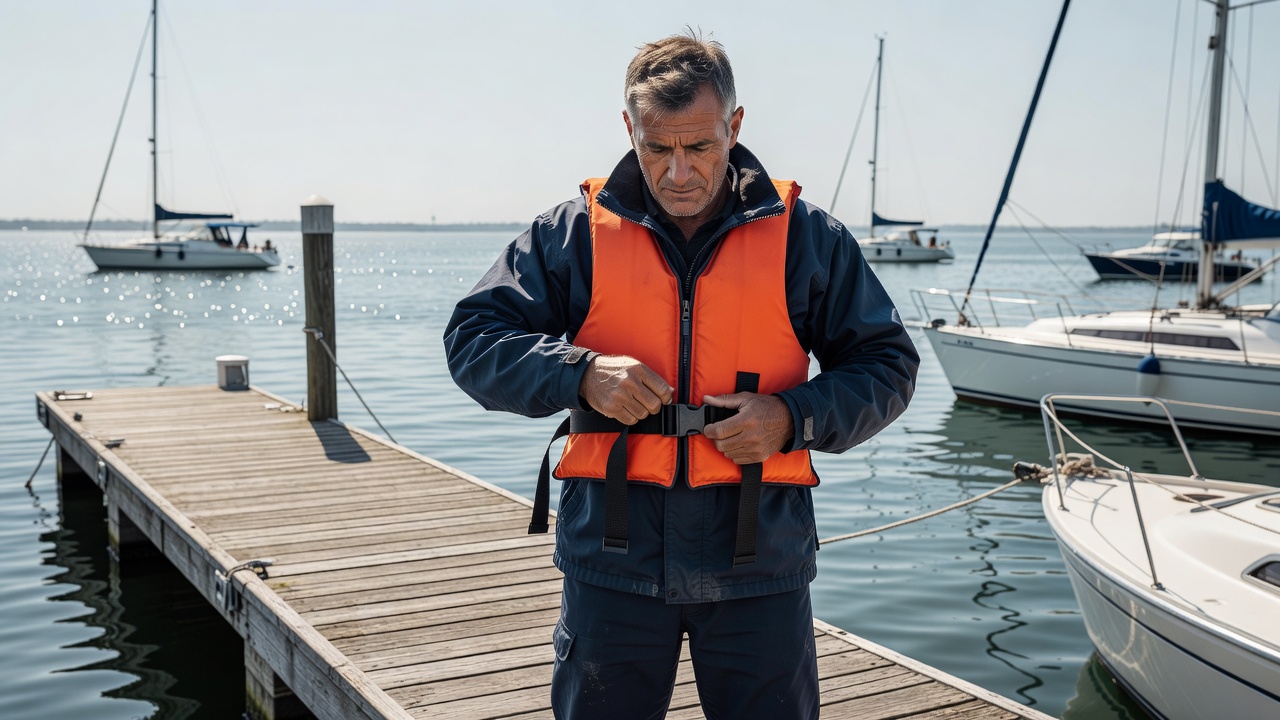
Start with flotation’s intended job
A buoyancy aid and a lifejacket are not two names for the same product. A buoyancy aid typically supports a conscious, active wearer in appropriate conditions; it should not be assumed to turn an unconscious person face-up. Lifejackets are designed around different performance requirements, but their behavior still depends on the product category, correct fit, the wearer and the clothing being worn.
The ISO 12402 series addresses personal flotation devices. Its performance levels are not simple body-weight categories, and a larger buoyancy number is not a universal answer. Consult the exact device label and manual. The RNLI’s lifejacket guidance is a useful starting point for understanding selection and regular checks. Where approval or carriage rules apply, check your jurisdiction rather than assuming one market’s marking is sufficient everywhere.
Inflatable devices introduce an additional maintenance system: cylinder, activation mechanism, bladder and associated components. Some inflate automatically; others require manual activation. Neither description tells you whether that particular device suits a child, a non-swimmer, a high-impact activity or a particular operating environment. Those questions belong with the manufacturer and competent local advice.
Check fit as a working arrangement
Try equipment over the layers you expect to wear. A device that feels tidy over a thin shirt may behave differently over waterproof clothing. Use all straps specified by the manufacturer, including crotch straps where supplied or required. Adjustment should follow the product instructions; improvising a tighter arrangement can create a different problem rather than solve the original one.
Check whether you can move your arms, sit comfortably and reach the controls or accessories you are expected to use. Ask an instructor or competent supplier to demonstrate the checks appropriate to the device. A shore-side fitting check cannot prove in-water performance, and casual immersion testing is not a substitute for a properly supervised training session.
Manufacturers such as Spinlock and Crewsaver publish product-specific information. Use the documentation for the exact model, not a visually similar device or a remembered procedure from another boat.
Choose clothing for exposure and movement
Clothing manages wind, spray, temperature and contact with the boat. It does not remove the risk of cold-water shock or replace flotation. A layered arrangement lets the wearer adjust insulation, but the right combination depends on activity level, forecast, water temperature and access to shelter. Waterproof trousers and jackets also need to work with lifejacket straps rather than obscure them.
Footwear needs appropriate grip on the surfaces aboard and a secure fit. Gloves may protect against abrasion, but they cannot make it safe to grab a moving loaded rope or place a hand near a winch. Look for useful dexterity rather than treating thickness as an automatic benefit. Sun protection, a suitable hat and eyewear can matter on cool days as well as warm ones.
For children and people with additional mobility or fit requirements, avoid assuming adult equipment can simply be adjusted down. Discuss suitable designs with a qualified instructor or specialist supplier, and check the manufacturer’s stated user limits.
Understand harnesses and accessible essentials
A deck safety harness and tether are part of a fall-prevention arrangement, not an assurance that someone cannot enter the water. Their effectiveness depends on attachment points, tether length, movement around the boat, supervision and a workable recovery plan. Being attached to a boat can itself create serious hazards if a person ends up overboard.
ISO 12401 concerns deck safety harnesses and safety lines. A lifejacket’s integrated harness does not turn every visible loop into an attachment point. Learn the specific system under instruction before relying on it. The Royal Yachting Association provides structured training pathways; reading a product overview cannot replace practiced movement and recovery procedures.
Whistles, lights and communication devices must be compatible, maintained and reachable. A useful item buried beneath clothing or stowed below may not be available when needed. Conversely, attaching more objects can create snagging or deployment problems. Keep the arrangement deliberate and follow the device maker’s accessory guidance.
Use this reading aid before choosing
- Write down the activity, expected conditions and wearer requirements.
- Check the exact product’s approval, intended use and fitting instructions.
- Identify inspection tasks, service requirements and replacement components.
- Ask how the equipment interacts with clothing and the boat’s safety arrangements.
- Get instruction in use; do not mistake ownership for preparedness.